


Launch of the Île-de-France Space Academy at UPEC
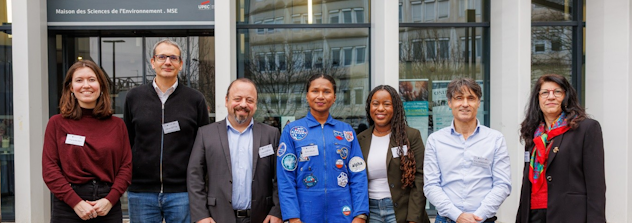
Space accessible to all: a look back at the successful launch of the Île-de-France Space Academy at UPEC
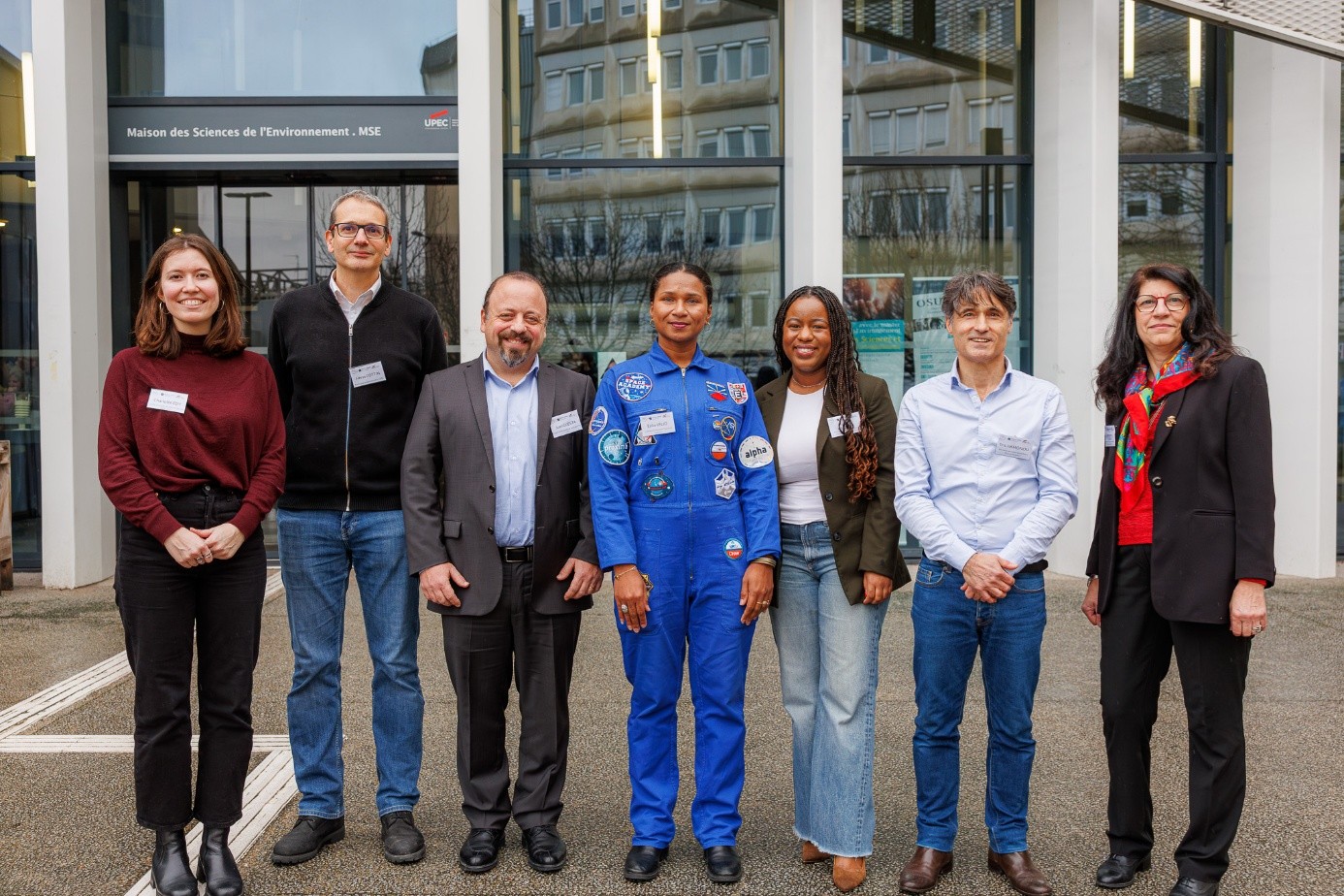
The organizers and speakers at the launch conference for the Île-de-France Space Academy at UPEC © Kevin Drzewiecki
On February 3, the Île-de-France Space Academy1 was launched at UPEC in front of a packed auditorium. The event brought together nearly 150 students and staff from different parts of the university. It was an opportunity for them to discover the many career opportunities currently available in the space sector and to understand how the Space Academy and UPEC can help them seize these opportunities.
Right from the start of the conference, the organizers wanted to make a lasting impression: UPEC is a real launch pad for space exploration. Through a fun and surprising interactive quiz, the audience discovered the many contributions made by the university's researchers to some of the most iconic exploration missions through its laboratories, including LISA2: the Mars rover, comet study probes, exploration of Titan's atmosphere, research conducted aboard the International Space Station, and observation of Earth from space.
This scientific excellence also feeds into UPEC's courses, with several specialized master's degrees that are unique in France and ambitious educational projects, such as the construction of a nanosatellite by students at the UPEC3 Space Campus, which is scheduled to be launched into orbit in the near future.
This commitment by UPEC to the space sector was reiterated by its president, Karine Bergès, who opened the conference. She highlighted the particular challenges facing the university: “We have a dual responsibility: to train highly skilled professionals and to ensure that these courses are accessible to as many people as possible.”
She particularly emphasized the importance of promoting equal opportunities and diversity, encouraging everyone to be bold and “open up all possibilities.” Echoing the testimony of Erika Vélio, an engineer in the space sector (notably at Arianespace and Airbus) and guest of honor at the conference (see our box), the president also invited women to fully embrace careers in the space industry in all its diversity. The future of space, she reminded her audience, cannot be built without them.
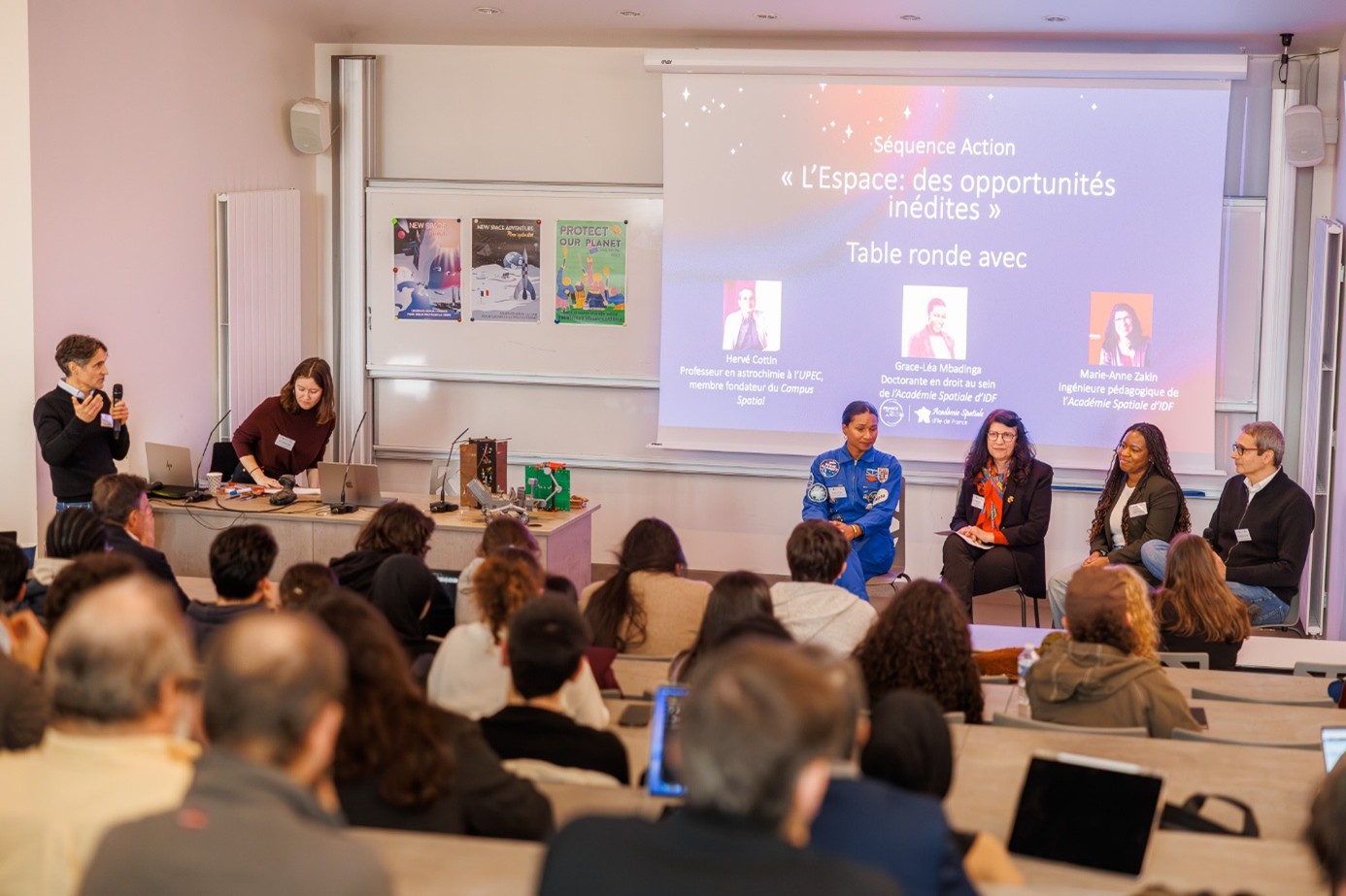
Round table discussion at the launch conference of the Île-de-France Space Academy at UPEC © Kevin Drzewiecki
Participants were then invited to explore the major transformations in the space sector during a round table discussion bringing together several specialists. Participants included Hervé Cottin, professor of astrochemistry at LISA within UPEC and specialist in space exploration missions; Grâce Léa Mbadinga, a doctoral student in law at the Île-de-France Space Academy, working on the geopolitical and legal issues surrounding space; and Marie Anne Zakin, an educational engineer at the Space Academy, who has compiled an inventory of changing needs and skills in this field.
The discussions highlighted the profound changes taking place in the space sector, which is now open to a much wider range of profiles than before. Of course, technical skills remain essential. Speakers particularly emphasized the acceleration of production cycles thanks to small satellites, as well as the growing importance of artificial intelligence and software development.
But they also pointed out that space missions have always been highly multidisciplinary, involving scientific, technical, legal, and economic expertise, and that this dimension has been further reinforced with the rise of space services. Earth observation, global connectivity, environmental monitoring: these are all rapidly developing fields, driven in part by the arrival of numerous private players in what is now known as New Space.
The organizers' message is clear: space is now vast enough to accommodate a wide variety of talents. The Île-de-France Space Academy, which brings together eight internationally renowned universities in the Paris region, has the specific mission of helping students and researchers identify, develop, and promote these skills.
At UPEC, “the Academy is the gateway to space that anyone interested in this field should explore,” enthuses Juan Cuesta, head of the Île-de-France Space Academy at UPEC and lecturer-researcher at LISA.
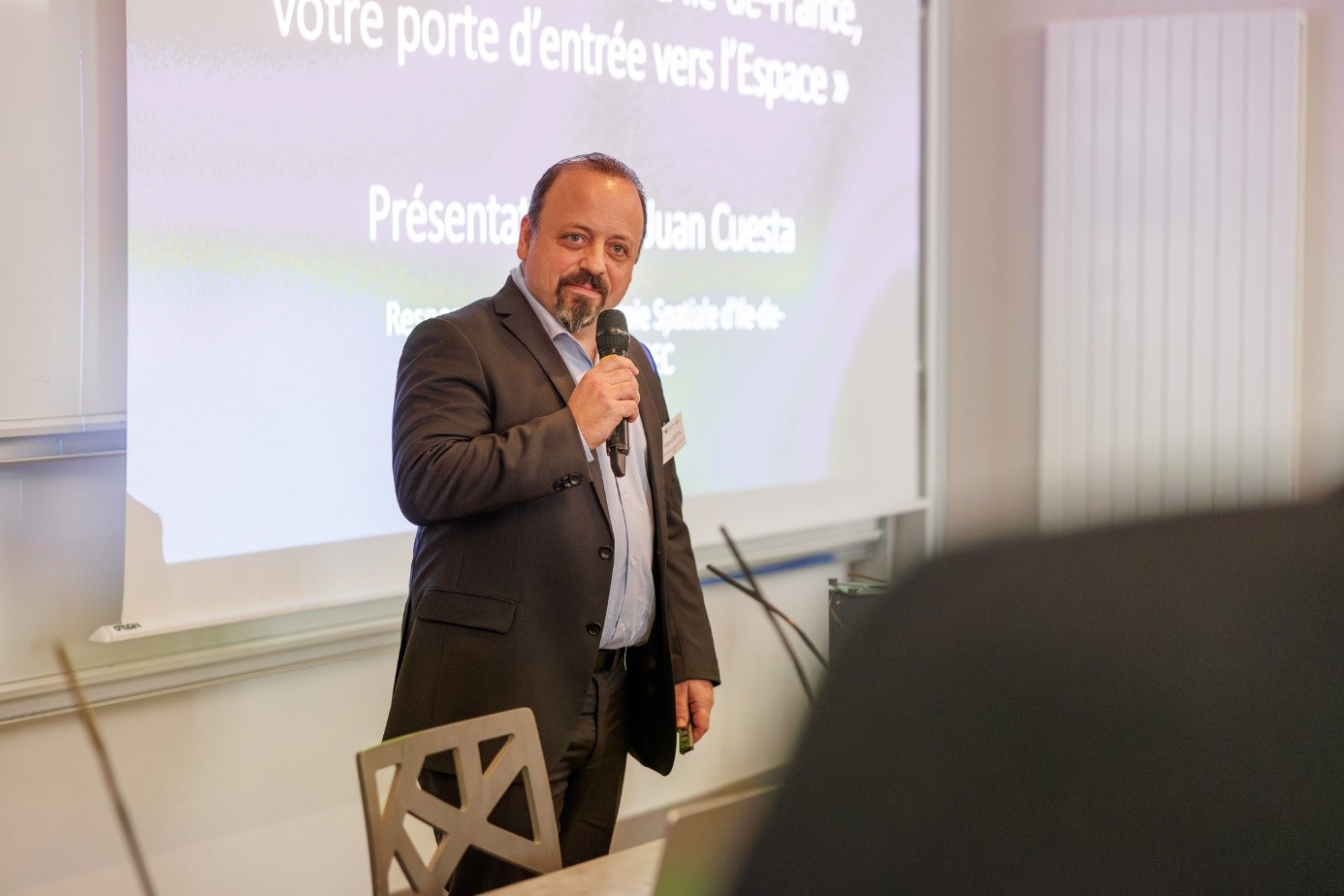
Juan Cuesta, Head of the Île-de-France Space Academy at UPEC © Kevin Drzewiecki
The Academy positions itself as an open ecosystem dedicated to training and research. It currently offers around 30 courses covering a wide range of space-related disciplines, including technology, engineering, digital technology, IT, health, law, and business. University degrees and specific teaching units have also been created to raise awareness of the challenges facing the space sector among students from generalist backgrounds.
At UPEC, the international master's degree in Satellite Systems and Applications (SSA)4 was launched two years ago in partnership with Cape Peninsula University of Technology in South Africa. This joint program allows students to benefit from both UPEC's expertise in space sciences and CPUT's expertise in space engineering and technologies. French and South African students follow the courses simultaneously thanks to dedicated classrooms equipped with digital broadcasting devices.
The Academy also helps to build a genuine space community in the Paris region. It organizes numerous events open to all students and staff from the eight partner universities, including workshops, conferences, and seminars led by industry experts.
Students can also participate in hackathons and innovation challenges, such as Definspace 20255 or the serious game Concepto6, dedicated to the design of innovative space systems, onboard instrumentation, or space stations.
One-week themed schools are also offered, including the Junior Space Academy7 dedicated to careers in space. In June 2026, UPEC will also organize the first edition of its summer school “Build your satellite in five days,” designed in partnership with other universities in the Academy (registration link). : https://forms.office.com/e/0i8Z6p36ga?origin=lprLink).
The Academy strongly supports mobility and internationalization through scholarships for international students enrolling in its courses or laboratories, as well as financial assistance for internships abroad: Call for applications 2025/2026: international mobility scholarships - Île-de-France Space Academy. Educational trips are also organized, including visits to European space agencies and participation in international conferences in the sector.
To date, more than fifty full or partial doctoral scholarships and more than twenty-five work-study contracts have been funded by the Academy. UPEC is also preparing to launch a call for applications for the creation of a one-year space chair, as well as for the hosting of industry experts—two per year—for one-month stays.
Finally, the Academy supports the development of educational platforms dedicated to space, such as CRITISC, which is devoted to the design, production, integration, and testing of space instruments and CubeSats at UPEC.
Whether you are a student, researcher, engineer, or university staff member, if you want to take on the challenge of space exploration, the Île-de-France Space Academy can help you. Feel free to contact its team for more information.
|
Erika Vélio
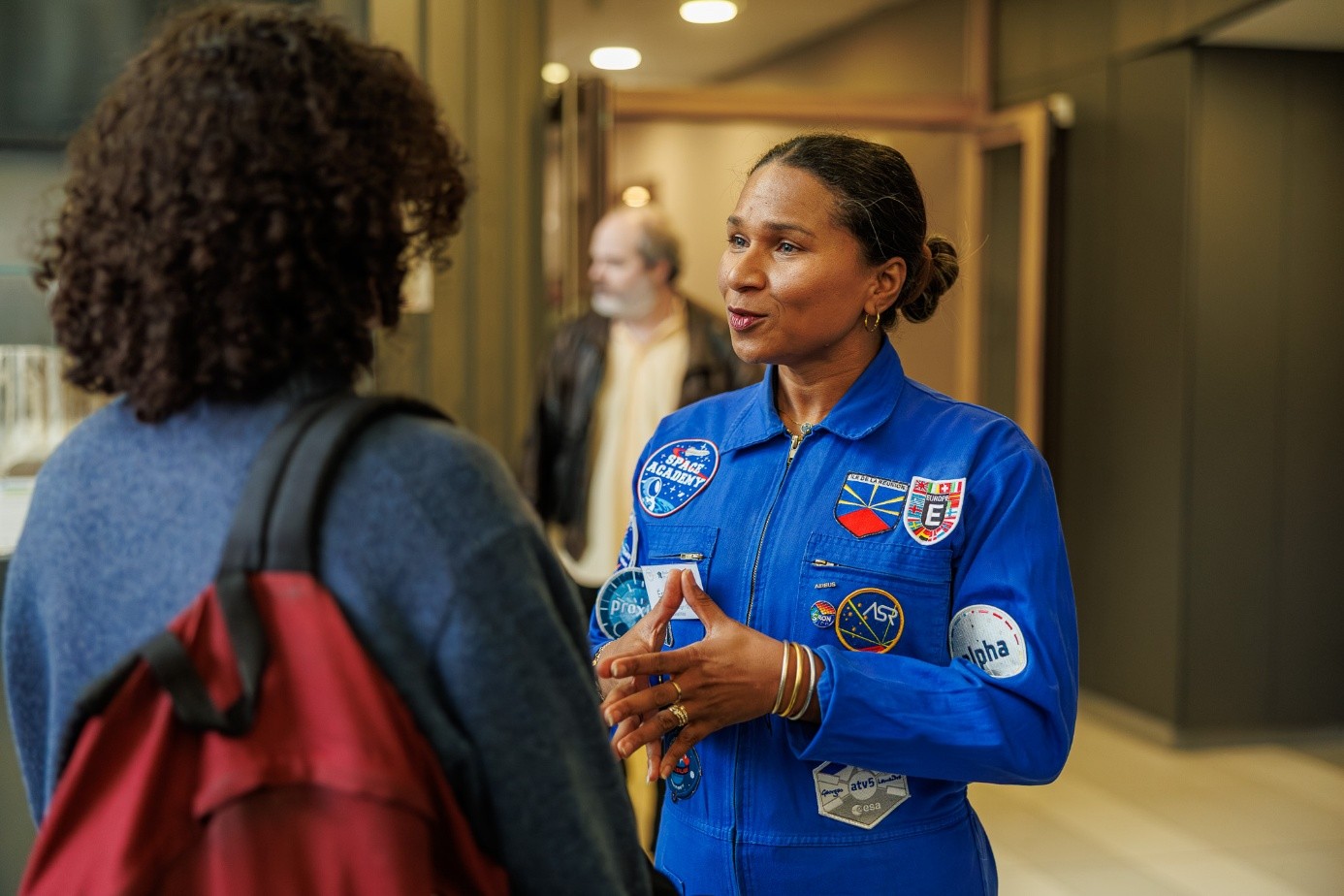
Exchange between Erika Vélio and a student during the launch conference for the Île-de-France Space Academy at UPEC © Kevin Drzewiecki
As guest of honor at the conference, Erika Vélio did not simply recount her professional career. She recounted a journey marked by distance, determination, and deliberate detours.
But her path has not been straightforward. After becoming a mother, she decided to become a physics and chemistry teacher. For several years, she has been mentoring students who are passionate about science but who, like her once, do not yet know how to turn their dreams into a career.
This led her to Airbus in the Netherlands, where she worked on NASA's Artemis program, which aims to send the first woman to the moon.
But what she wants to convey to students can be summed up in one simple idea: paths are never perfectly straight. “When you want to turn a dream into reality, you have to be a good captain: stay on course, but also know how to tack with the wind.”
|
More info :
Académie Spatiale d’Île-de-France : Académie Spatiale d'Île-de-France Ensemble pour un nouvel espace durable pour tous et toutes
Ecole d’été « Build your own satellite in 5 days », lien d’inscription : https://forms.office.com/e/0i8Z6p36ga?origin=lprLink
Appel à candidatures bourses de mobilités internationales : Appel à candidatures 2025/2026 : bourses de mobilités internationales - Académie Spatiale d'Île-de-France
Campus Spatial UPEC : Campus Spatial UPEC
Master Génie Industriel parcours International Systèmes satellitaires et applications : Master Génie Industriel parcours International Systèmes satellitaires et applications
Organization of the launch of the Ile-de-France Space Academy at UPEC:
Charlotte Edy, cheffe de projet de l’Académie Spatiale d’Île-de-France à l’UPEC : This email address is being protected from spambots. You need JavaScript enabled to view it.
Eric Hamonou, expert et animateur scientifique de l’événement (Science Partners) : This email address is being protected from spambots. You need JavaScript enabled to view it.
Juan Cuesta, responsable de l’Académie Spatiale d’Île-de-France à l’UPEC : This email address is being protected from spambots. You need JavaScript enabled to view it.
1 À propos de l’Académie Spatiale d’IDF - Académie Spatiale d'Île-de-France
2 Laboratoire Interuniversitaire des Systèmes Atmosphériques : Accueil ; Laboratoire d’Algorithmique, Complexité et Logique : Page d'accueil du LACL ; Laboratoire Images, Signaux et Systèmes Intelligents : LiSSi – Le Laboratoire Images, Signaux et Systèmes Intelligents ; Institut universitaire et de technologie
3 Campus Spatial UPEC
4 Master Génie Industriel parcours International Systèmes satellitaires et applications
5 Hackathon DefInSpace 2025 – 24h pour imaginer la défense spatiale de demain - Académie Spatiale d'Île-de-France
6 Serious Game CONCEPTO – Space Design Station - Académie Spatiale d'Île-de-France
7 [REGISTRATION OPEN] June 2026: Summer school for undergraduate student – Junior Space Academy #3 - Académie Spatiale d'Île-de-France
Lam Nguyen awarded the 2025 Instrumentation and Innovation Prize by the French Chemical Society (SCF)

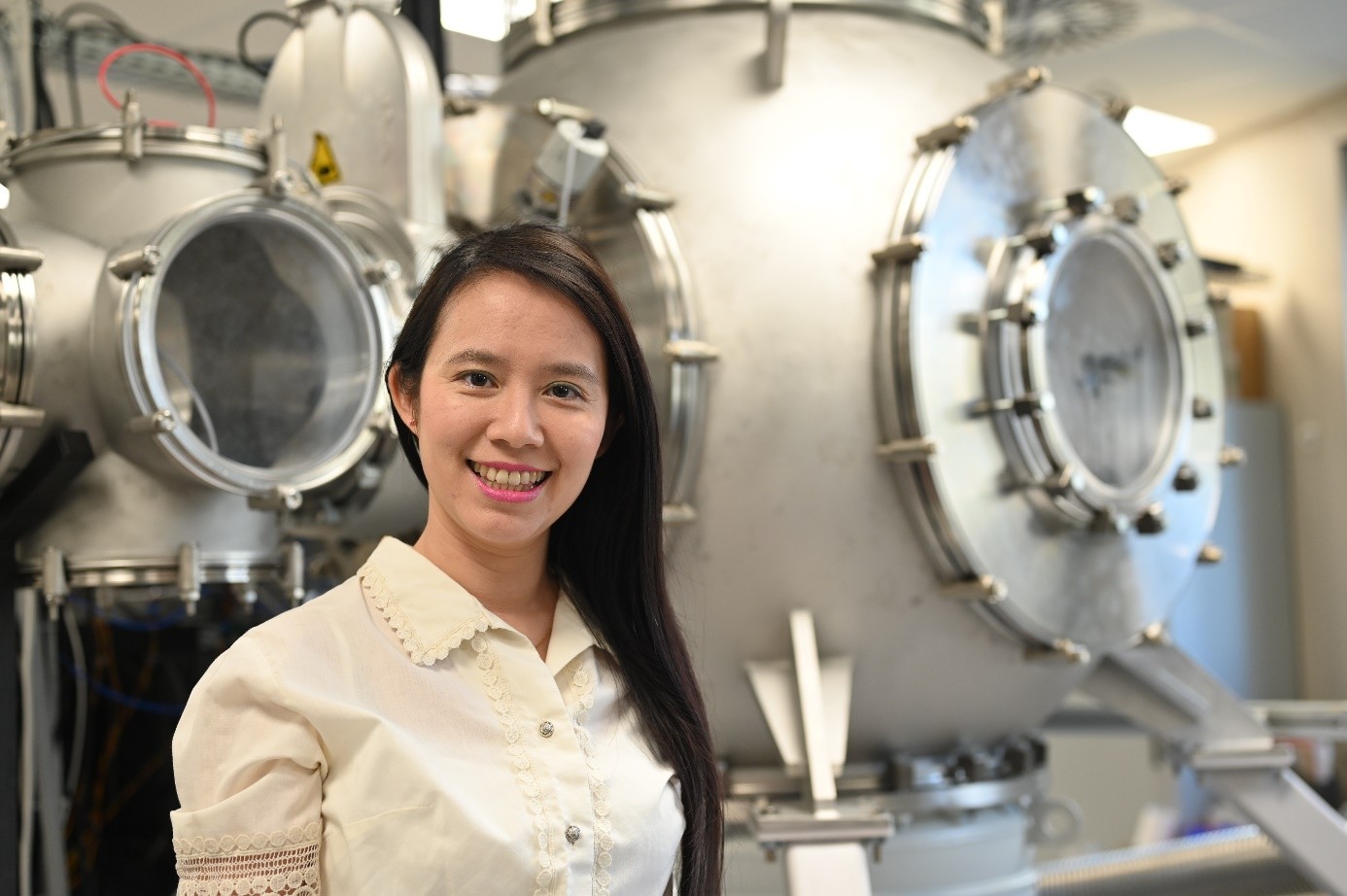
Lam Nguyen is a professor at the University of Paris-Est Créteil and a junior member of the Institut Universitaire de France. She leads the Spectroscopy & Atmospheres group at the Interuniversity Laboratory of Atmospheric Systems, which develops and operates very high-resolution spectroscopy instruments for studying molecules of interest in atmospheric chemistry, astrophysics, and biology.
She received her PhD in chemistry in 2012 (RWTH Aachen University, Germany) and specializes in molecular jet microwave spectroscopy, with a dual focus on instrumental development and spectral analysis. During the pandemic period (2019-2022), she designed and built the innovative PARIS (Passage And Resonance In Synergy) spectrometer, which combines the sensitivity of a resonant cavity with the speed of a chirp excitation spectrometer. PARIS marked an important milestone in instrumental development in microwave spectroscopy, achieving a resolution of 2 kHz in chirp excitation, previously only accessible with a resonant cavity, and achieving record sensitivity at the ppb level with this same cavity. Her expertise in modeling and spectral analysis focuses on molecules with large-amplitude motions, with quantum tunneling and nuclear quadrupole coupling effects. She combines experimental data and quantum chemistry calculations to characterize molecular structures and their internal dynamics. Her work has applications in physical chemistry, astrophysics, atmospheric sciences, and biology, particularly in understanding odor molecules and natural substances. She is leading an ERC (European Research Council) Starting Grant project to develop new instrumental and spectroscopic approaches around these themes.
More info :
Site de la SCF
Projet PARIS-FTMW
Gérard Toupance passed away
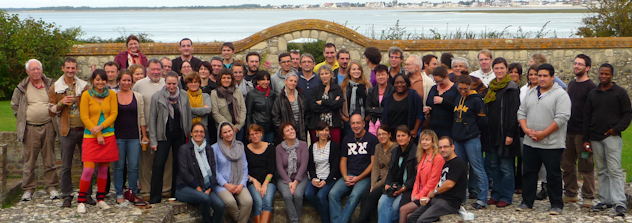
We were deeply saddened to learn of the death on July 14, 2025 of Gérard Toupance, former director of LISA and former interim president of the University of Créteil.
Gérard Toupance, a graduate of ESPCI, spent most of his career as a teacher-researcher at Université Paris XII, now Université Paris-Est Créteil. In 1973, he defended a Doctorat d'Etat thesis devoted to the study of the energy-induced evolution of models of the Earth's primitive atmosphere, using an original atmosphere generator he designed and built. This enabled him to examine the possibility of forming prebiotic compounds in mixtures such as CH4/NH3, CH4/N2 or CH4/H2S under UV irradiation. He was thus a precursor of exobiology, which has become one of LISA's flagship research themes. From the research team he led in René Buvet's laboratory, he created the LPCE (Laboratoire de Physico-Chimie de l'Environnement). In the early 1980s, Gérard Toupance, sensing the potential problems posed by the release of numerous reactive chemical compounds into the earth's atmosphere, took a major scientific turn by focusing his research on air quality and photochemical pollution in particular. At a time when these subjects were not necessarily considered of interest in the academic world, he carried out highly original work, notably on the physico-chemical processes leading to the formation of ozone peaks downwind of major cities.Convinced of the need to provide public authorities with air quality forecasting tools, he embarked, in collaboration with IFP, on the development of a three-dimensional air quality model. At the same time, as part of the European TOR (Troposheric Ozone Research) program, he set up a measuring station at the tip of Brittany to qualify the quality of incoming air on the European continent. He then initiated a major European air quality measurement campaign in the Marseille region (“ESCOMPTE” campaign), one of the first dedicated to validating 3D air pollution models. He was also heavily involved in a similar campaign in the Paris region (“Esquif” campaign). Air quality and photochemical pollution are, once again, themes that remain at the heart of the laboratory's activities.
Over the years, Gérard Toupance has supervised numerous PhD students, many of whom are now major players in the scientific community or in the field of air quality measurement, monitoring and forecasting.
Gérard Toupance played a key role in the creation in 1993 of the Laboratoire Interuniversitaire des Systèmes Atmosphériques (LISA), a major laboratory in the field of atmospheric sciences which today employs over a hundred people. He was one of its main founders and its first director. In this capacity, he structured and organized the laboratory, but even more so, he endowed it with a philosophy that still strongly influences it today.
Gérard Toupance was by all accounts a researcher and teacher of great scientific rigor and honesty. He was committed to promoting high-quality, demanding science that was useful to society, particularly in addressing environmental issues at a time when these issues were not so clearly established.
Interment took place on Monday July 21, 2025 in the Journet cemetery (Vienne).
Publication: Geological walk in Briançon
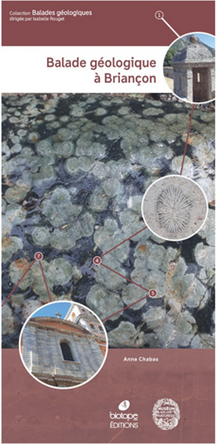
This new guide, written by Anne Chabas, Professor at LISA, joins the “Balades géologiques” collection published by the National Museum of Natural History and the Geological Society of France.
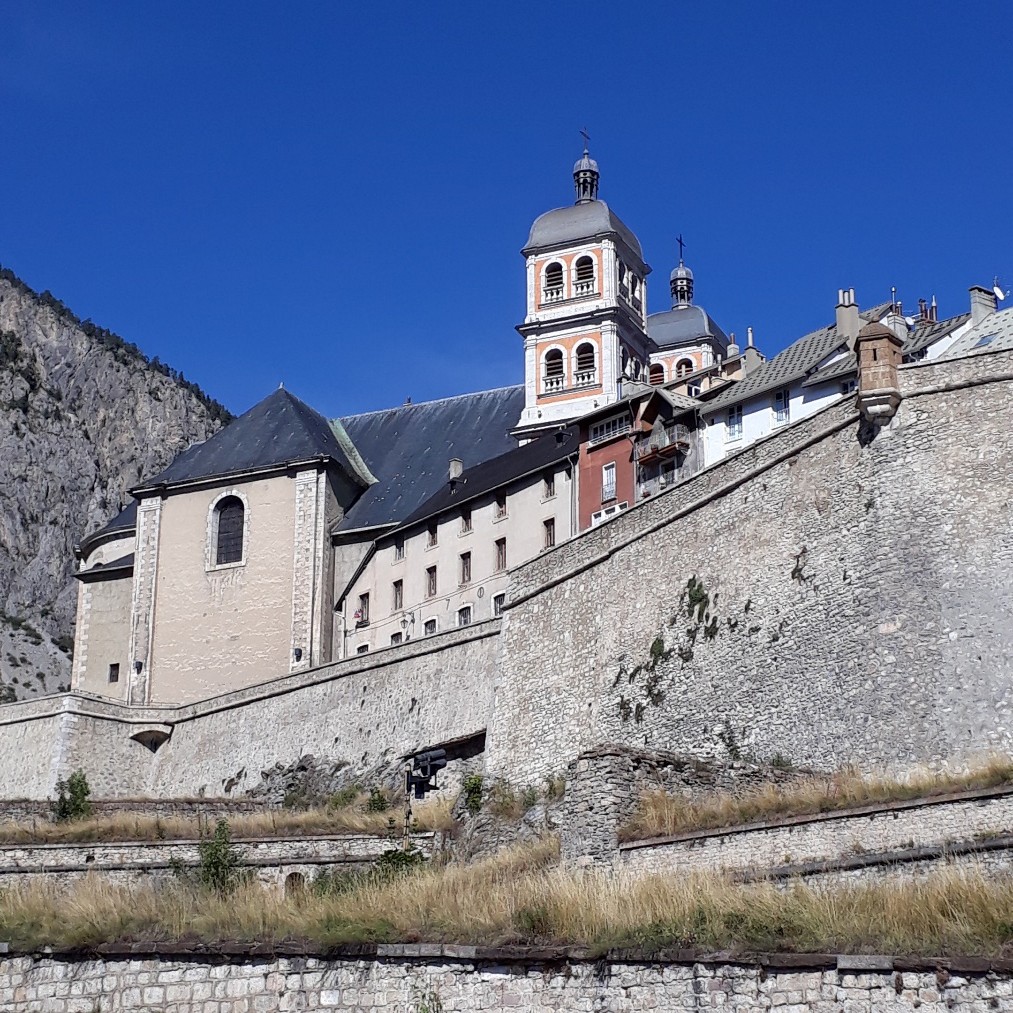
Supported by LISA, the UPEC Faculty of Sciences, the Briançonnais Center for Alpine Geology, and the House of Geology and Geopark, this tour tells two stories: one human, marked by the construction of the Vauban city, and one geological, through the recognition of the building stones.
The highest town in France, nestled on its glacial lock, opens the doors of its Jurassic limestone ramparts to you. Step through them and set off on a unique itinerary for a geological journey through time!
Enjoy your walk as you discover Briançon and its citadel.
Don't hesitate to also read from the same collection: “Balade géologique à Créteil” (Geological Walk in Créteil), where you will discover the city with a new perspective, from its Neolithic past to its new neighborhoods.
The entire collection: Balades géologiques