François Raulin passed away
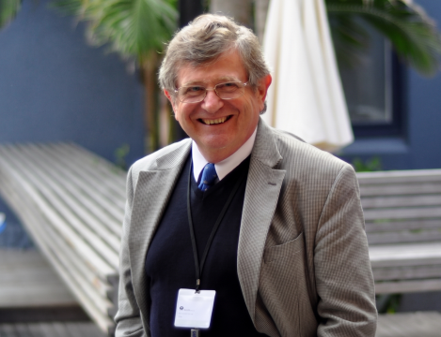
We were deeply saddened to learn of the passing of François Raulin, Professor Emeritus at UPEC and LISA, on June 9, 2026.
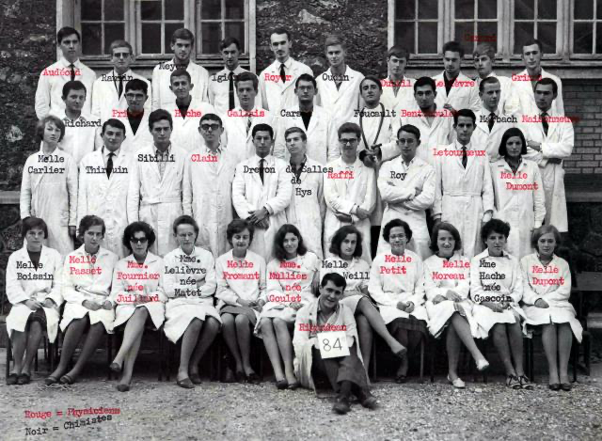
A graduate of the École Supérieure de Physique et de Chimie Industrielles de la Ville de Paris (ESPCI) in 1969, François Raulin began a research career dedicated to the study of the origins of life. In the following years, at Université Paris 6, he worked with Gérard Toupance—with whom he would later co-found the Laboratoire Interuniversitaire des Systèmes Atmosphériques (LISA)—and René Buvet, one of the first French researchers to explore the chemistry of the origins of life. He then pursued a State Doctorate focusing on the role of sulfur in prebiotic chemistry. Between 1977 and 1980, he traveled twice to the United States: first to Carl Sagan’s renowned laboratory at Cornell University, and later with Cyril Ponnamperuma at the University of Maryland (where he met Rafael Navarro-Gonzalez, a Mexican colleague whose career would mirror his own in Mexico, and with whom he would collaborate closely until the early 2000s). His work thus spanned planetology with Carl Sagan, prebiotic chemistry with Cyril Ponnamperuma, and upon his return to France, he synthesized these fields through astrobiology. In 1980, he was appointed as a maître-assistant at Université Paris 12, and later became a full professor in 1985. It was there that he established enduring research on the origins of life and connected it to the search for life beyond Earth. After developing his research group at LISA, he served as the laboratory’s director from 1997 to 2005. His two consecutive terms as director had a profound impact on the young laboratory, providing it with a solid foundation.
His research focused on planetology and astrobiology, particularly on Titan, comets, and Mars. He pioneered a generation of chemists dedicated to the molecular characterization of atmospheres and planetary environments within a community traditionally dominated by astrophysicists. However, he ensured that his team maintained a balanced, interdisciplinary approach between physics and chemistry. He initially pursued his research through laboratory simulation experiments—early Earth, Titan, Neptune, comets, Mars—and also through in situ analysis by spearheading the development of cutting-edge chemical analysis instruments, such as gas chromatographs. These instruments were sent to Titan, comet 67P, and will soon be deployed on Mars. Many of his former PhD students continue to follow in his footsteps within various planetology teams across France. He served as an Interdisciplinary Scientist (IDS) for the Cassini-Huygens mission and was a co-investigator for the CIRS (Cassini), ACP, and GC-MS (Huygens) experiments. He was also a co-investigator for the COSAC and COSIMA experiments on the European Rosetta cometary mission and, until recently, the Principal Investigator (PI) of the MOMA GC instrument, which is set to launch for Mars in 2028. His scientific legacy is both deep and vast. Just a few months ago, one of his earliest papers, published in 1975 on the chemistry of atmospheres composed of CH₄ and H₂S, was cited in scientific literature. It served as a reminder to authors claiming that a possible detection of dimethyl sulfide in the atmosphere of exoplanet K2-18b could be a sign of life—François had already demonstrated 50 years ago that a simple electric discharge was sufficient to produce such compounds.
Together with his close colleague André Brack, he is considered one of the founding fathers of astrobiology in France. From the 1980s onward, he advocated with courage and determination—often in the face of skepticism—for the recognition of this discipline. He was the driving force behind the creation of the first GDR Exobiologie (Research Group in Astrobiology) in 1999, serving as its first director. In 2004, he chaired the first CNES Astrobiology Working Group and, in 2009, contributed to the establishment of the French Society of Astrobiology, of which he became the first president. He was often the first to take initiative, yet always remained deeply committed to sharing and nurturing a scientific legacy. Throughout his career, he also played a key role in organizing and structuring the international astrobiology community. He served as president of Commission F (Life Sciences) of COSPAR (Committee on Space Research), vice-president of COSPAR’s Planetary Protection Group, and first vice-president of ISSOL (International Society for the Study of the Origin of Life). The international and interdisciplinary scientific community recognizes him as a pioneering, honest, diplomatic, patient, driven, and generous scientist. Even after retiring in 2015, he continued to hold numerous scientific and institutional responsibilities. Just a few weeks ago, he was still attending meetings of the Spatial Organic Physico-Chemistry Group, which he had founded at LISA over 30 years ago, as well as CNES meetings for the ExoMars mission, looking ahead to its 2028 launch. He never wanted a retirement party and kept working on the MOMA GC instrument, participating in COSPAR’s Planetary Protection Panel meetings for as long as he had the strength.
Committed to education and knowledge sharing, he coordinated the creation of the Bachelor’s and Master’s degrees in Chemistry at UPEC in 1991 and served as their first director until 1999. A deeply dedicated teacher, he inspired generations of students and fostered vocations in both teaching and research. Beyond his numerous scientific articles, he also leaves behind a legacy of popular science contributions published in magazines such as Ciel et Espace, Science et Vie, and Science et Avenir, as well as books on the origins of life and astrobiology. He frequently participated in radio and television programs, as he had a talent for clearly explaining abstract and distant scientific concepts. Several videos attest to this, including interviews where he describes his career and work (1, 2), discusses the French Astrobiology Society and in this video, and explores the stakes of astrobiology research. In them, we see François just as we knew him.
We invite everyone who had the opportunity to know François and would like to share their memories to leave a tribute. These messages will be compiled into a commemorative book for his family. Access to the contribution submission platform (before July 31, 2026).